
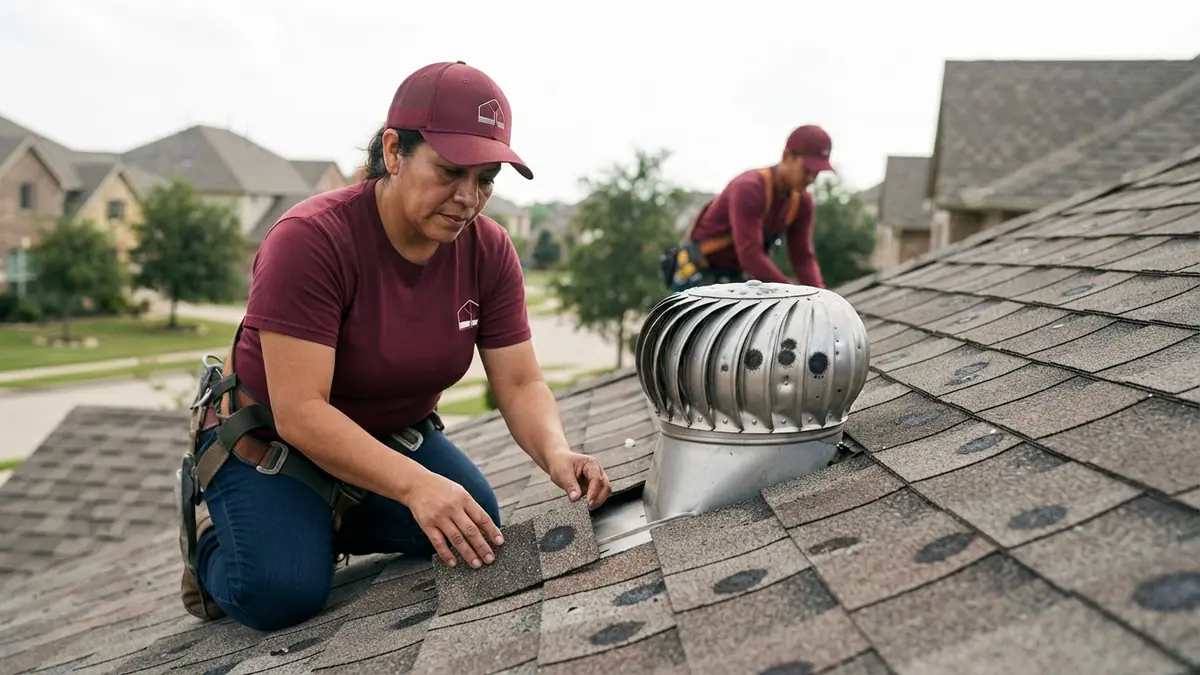
What does hail do to a shingle?
Hail knocks the granule layer loose and fractures the asphalt mat underneath, leaving a soft, round bruise. The granules are the shingle's sunscreen. Once they are gone, ultraviolet light reaches the asphalt directly and the mat hardens, then cracks along the line the impact started.
This is why hail claims get argued. A roof struck in April often shows no leak until the following spring, and by then the insurer is asking when the damage happened.
What are the 8 signs of hail damage?
Dented vents, bruised shingles, spatter marks, dimpled gutters, granules in the downspout, torn window screens, dented garage doors and damaged air-conditioner fins are the 8 signs. The metal ones matter most, because soft metal records a strike that shingles hide.
- Dented roof vents and caps. Aluminum turbine housings dimple under ice that leaves the surrounding shingles looking untouched.
- Bruises in the shingle mat. A circle of missing granules with a soft center that gives under a thumb, like a fresh dent in drywall.
- Spatter marks. Clean spots on oxidized metal where ice struck and washed the surface. These date the event.
- Dimpled gutters. Dents along the top edge of a gutter run show which direction the storm came from.
- Granules in the downspout. A heavy wash of granules at the discharge point after a storm, well beyond the normal trickle.
- Torn window screens. Ground-level evidence that supports what is on the roof.
- Dented garage doors and siding. Soft aluminum and vinyl on the same elevation as the roof damage.
- Bent air-conditioner fins. The condenser sits in the open and records the same strike the roof took.

Can hail damage be seen from the ground?
No, bruising is invisible from ground level. Granule loss reads as a slight color variation from thirty feet away, and the fracture underneath shows only by touch. Everything a homeowner can verify standing on the lawn is secondary evidence: gutters, screens, the condenser and the downspout discharge.
That is the argument for a documented check after any storm that dropped ice. A roof inspection returns dated photographs slope by slope, which is the record an adjuster works from.
How does an adjuster decide repair or replacement?
Adjusters count impacts inside a marked ten-by-ten-foot test square on each slope. The count against the carrier's threshold decides whether the slope is repaired or replaced. Slopes are assessed separately, so a roof can end up with one plane replaced and another patched.
Bring your own documentation to that meeting. Photographs taken before the storm establish the roof's prior condition, which settles the question of whether the damage is new.
What comes next after a hailstorm?
- Photograph each elevation from the ground the same day, including the yard debris.
- Check gutters, screens and the condenser for the secondary signs above.
- Report the loss to the insurer promptly, because policy notice deadlines run from the date of loss.
- Arrange a documented inspection rather than waiting for a leak to appear.
- Keep every receipt for temporary measures.
A roof that took a strike this spring is on a clock. Hail damage roof repair covers what the claim process looks like from there.