
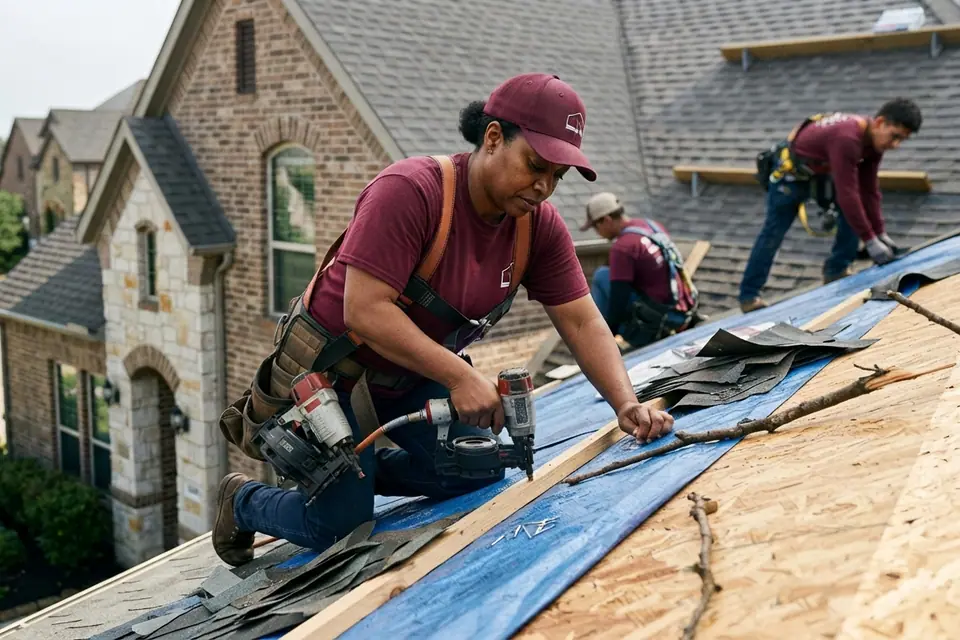
Hail damage on a Fulshear roof
What bruising looks like and how the claim is scoped.
Fulshear wind damage and tarping
Call (716) 328-9097 for storm damage roof repair in Fulshear, TX. Exposed decking is tarped, fallen limbs cleared off the covering, wind uplift documented for a claim and the stripped sections rebuilt. Calls are answered around the clock during Gulf Coast storm season. Tarping stops the water; the permanent rebuild follows in daylight, when roof work is safe.
Calls answered 24/7
Wind lifts the leading edge of a shingle until the seal strip lets go, then peels the course behind it. Pressure is highest at rakes, eaves and ridges, so damage starts at the roof's edges and works inward across the field.
Fulshear sits in the path of Gulf systems that arrive with sustained wind rather than a single gust. Hurricane Beryl made landfall in Texas as a Category 1 storm on 8 July 2024 and tracked up the western side of the Houston metro. The National Weather Service recorded a 76 mph gust at Sugar Land, noting the power failed during the strongest winds, so the true peak was likely higher. Close to 209,000 Fort Bend County customers lost power, and the county was added to the federal disaster declaration.
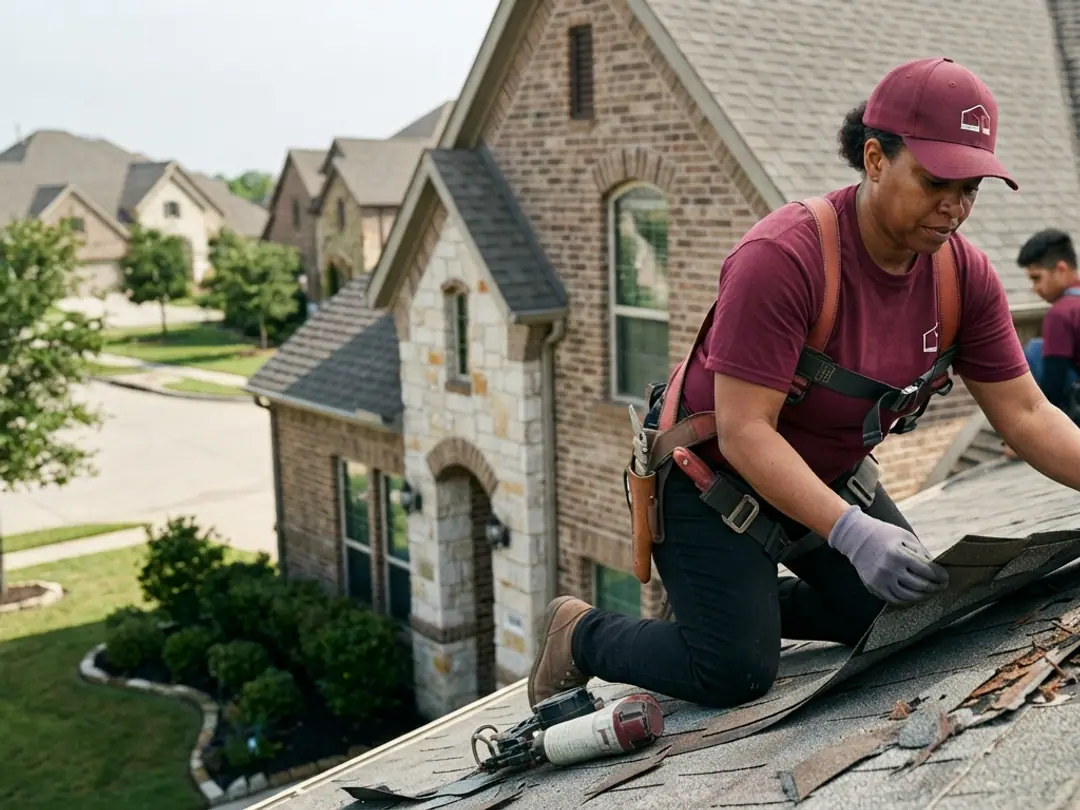
These steps protect the house and the claim. Stay on the ground — wet decking and hidden soft spots give way underfoot.
Wide shots of each elevation plus close-ups of debris and shingle pieces in the yard date the damage.
Buckets under drips and a small hole punched in a bulging ceiling release trapped water in one place.
Exposed decking absorbs water fast, so a temporary cover matters more than a permanent fix on day one.
A limb resting on the covering is evidence; a roofer removes it once the damage beneath is recorded.
Tarps, plywood and a hotel night are reimbursable under most policies as reasonable emergency measures.
Policies carry contractual notice deadlines that run from the date of loss, not the date the leak appears.
The table separates the same-day measures from the rebuild that follows once materials and weather allow.
| Phase | What happens | Timing |
|---|---|---|
| Emergency tarping | Reinforced tarp battened over exposed decking to shed water | Same day where access allows |
| Debris removal | Limbs and blown material lifted clear after the damage beneath is photographed | Same day to 48 hours |
| Damage assessment | Slope-by-slope record of lifted, creased and missing shingles for the claim | Within days |
| Deck and underlayment repair | Water-damaged sheathing cut out, membrane and underlayment rebuilt | After the claim is scoped |
| Covering rebuild | New shingles tied into the surviving field, or a full replacement | Once materials arrive |
Widespread storms fill every local schedule at once, so permanent work queues behind emergency covers across the whole area. See what storm repairs cost here before the adjuster calls.
No, a tarp buys weeks, not seasons. Sun and wind break down the fabric, the battens that hold it work loose, and water finds the fastener holes. Treat it as a hold until the covering underneath is rebuilt.
Storm work and hail work travel together on the Gulf Coast, because the same system that brings wind often drops ice. A roofer checking wind damage also looks for the bruising that marks a strike. The hail damage page covers what an adjuster looks for, and a documented roof inspection records both in one visit.
Most homeowner policies reimburse reasonable emergency measures taken to prevent further damage. Keep the invoice and the photographs taken before and after the tarp went on. Confirm the coverage with the insurer before authorizing large temporary work.
No, stay off a storm-damaged roof. Wet shingles are slick, soaked decking gives way underfoot, and a downed line energizes gutters and flashing. A roofer carries fall protection and knows where the framing runs.
Exposed decking needs covering the same day. Oriented strand board swells and delaminates once it is wet, which turns a shingle repair into a decking replacement. The permanent rebuild follows once the covering is scoped.
A single event strips the shingles whose seal strip had already aged. Newer roofs lose isolated tabs; roofs past ten years lose whole courses. Age and wind exposure together decide whether a repair or a replacement follows.
Call now to reach a Fulshear roofer for emergency tarping and storm repair.
Calls answered 24/7
What bruising looks like and how the claim is scoped.
A slope-by-slope record with photographs for the insurer.
Tracing water from the ceiling back to the opening above.